

Summarize in one click
Open a meeting note and hit Summarize — Screenpipe reads the transcript and the screen captured during the call, then writes decisions, action items, and follow-ups into the note. Summarize buttons sit at the top and bottom of the note dock.
one-click summary from the meeting note — decisions, actions, risks
What Screenpipe captures
Setup checklist
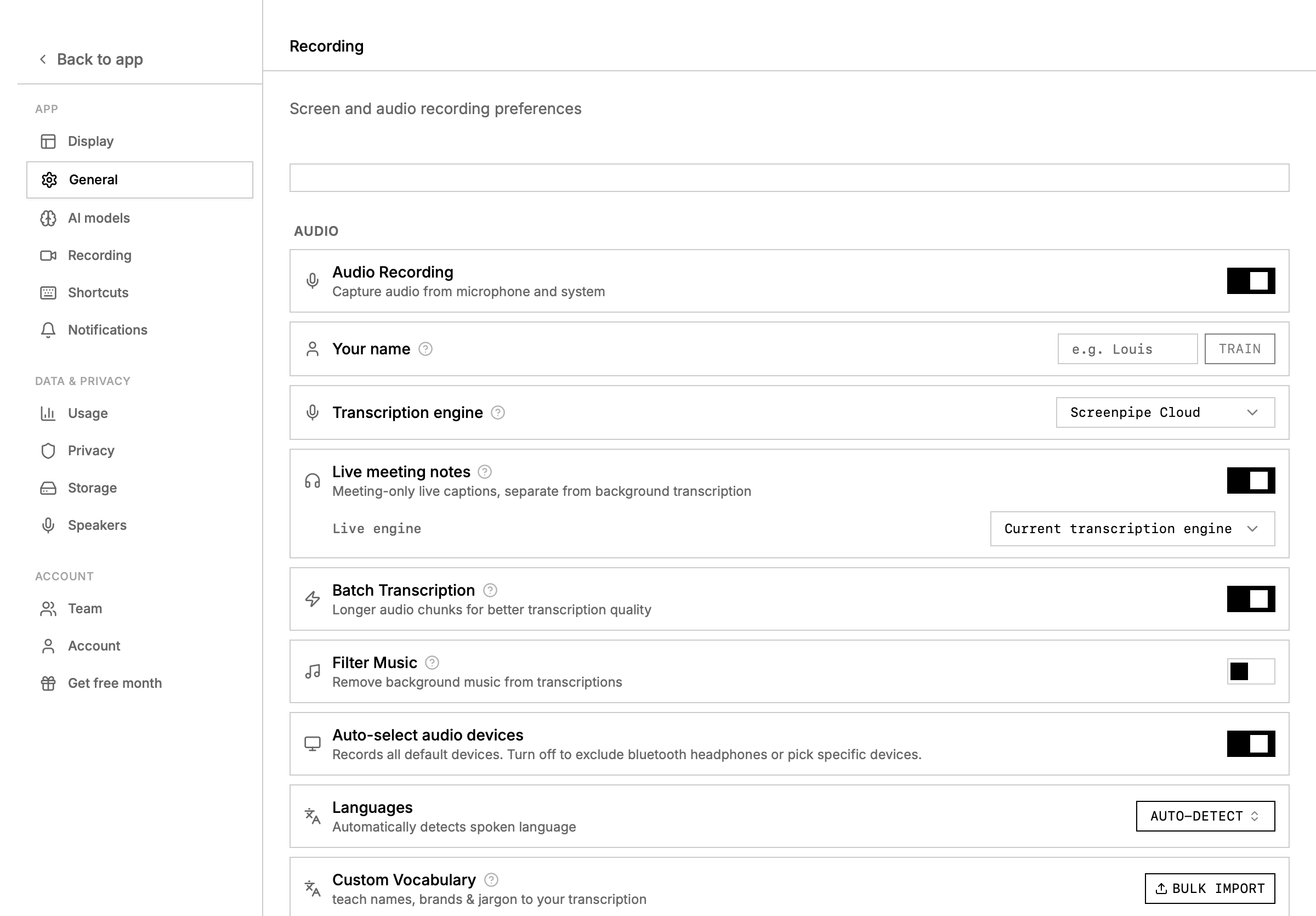
- Open settings -> recording and choose the microphone and system audio sources you want.
- Connect Google Calendar in settings -> connections if you want attendee-aware speaker naming.
- Open the meeting app normally: Zoom, Google Meet, Microsoft Teams, Slack huddles, or another call surface.
- Let Screenpipe record and transcribe in the background.
- Open the meeting from the timeline or search with
content_type=audio.
Live transcript workflow
Use the meeting transcript sidebar to:- Rename a speaker once and propagate the label through the meeting
- Search for similar speakers before merging duplicates
- Copy the full transcript as plain text
- Open the related timeline moment when you need visual context
- Summarize the meeting with your default AI or a selected scheduled task
Summarize with a scheduled task
Meeting summaries can use any installed or store scheduled task. Use a scheduled task when you want a repeatable output format, CRM writeback, an Obsidian note, or a sales-call summary that always includes the same fields. Good summary task instructions include:Speaker cleanup
Meeting APIs
List and search meetings
q parameter searches across meeting title, attendees, and notes with case-insensitive substring matching.